


Ingredient Guide
Caffeine: The Dose Is the Whole Conversation
- Evidence-based
- Structure/function only
- No proprietary blends
What it is
How it works
Why the form & source matter
How Monthlees uses it
Frequently asked questions
What does caffeine do?
It supports alertness, attention, and reaction time by blocking adenosine, the body's tiredness signal.
How much caffeine is sensible?
Health authorities consider up to ~400 mg/day reasonable for most healthy adults, with single doses around 200 mg.
Why does caffeine affect people differently?
Sensitivity and habitual intake vary, so the same dose feels different from person to person.
Will caffeine affect my sleep?
It can, especially close to bedtime — timing matters as much as amount.
Research & references
-
A review of caffeine's effects on cognitive, physical and occupational performance — Neuroscience & Biobehavioral Reviews (2016) (source)
Caffeine blocks adenosine receptors; improves alertness, vigilance, attention and reaction time at low-to-moderate doses. -
Scientific Opinion on the safety of caffeine — EFSA Journal (2015) (source)
Habitual intake up to 400 mg/day and single doses up to 200 mg do not raise safety concerns for healthy non-pregnant adults.
References are provided for general educational context. They do not imply that this product treats, cures, or prevents any disease.
These statements have not been evaluated by the Food and Drug Administration. This product is not intended to diagnose, treat, cure, or prevent any disease.
Free 3-minute assessment. No purchase required.

Energenix™ Strips
50 mg caffeine + 30 mg L-theanine + B12 — smooth, focused energy in a fast-dissolving oral strip.

Focus Fuel™ (Sour Candy)
Alpha-GPC, L-theanine, and 200 mg green tea caffeine — sour candy nootropic powder for sharp, smooth focus.
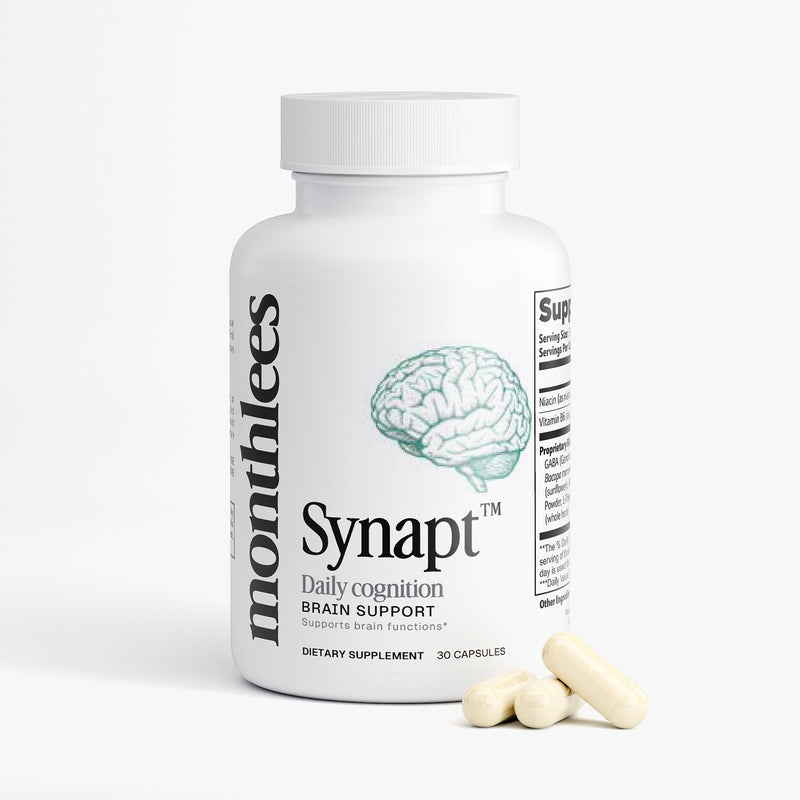
Synapt™
Niacin, B6, and a 255 mg nootropic blend with Alpha GPC, L-theanine, bacopa, and huperzine A — one daily capsule for focus and cognitive clarity.
Monthlees membership
Unlock member pricing on every reorder — cancel anytime.
Join for member pricing →Explore more guides
See how this ingredient fits into broader goals and daily routines.


