Ingredient Guide

Reishi: Two Active Fractions, Not One

Reishi is unusual among functional mushrooms in that two different compound groups define it, not one. It carries polysaccharides — including beta-glucans — and a separate family of triterpenes, and the two are drawn out by different parts of the extraction process. That's the useful lens for reishi: a well-made extract reflects both fractions, which is also why a genuine reishi tends to taste noticeably bitter.

  • Evidence-based
  • Structure/function only
  • No proprietary blends

What it is

Reishi (Ganoderma lucidum) is a woody mushroom used as a concentrated extract in capsules, blends and gummies. Its two recognized compound groups are polysaccharides (such as beta-glucans) and triterpenes. The hard fruiting body isn't eaten directly; the value comes from extracting and concentrating those constituents into a usable powder.

How it works

Reishi is studied for its composition — the polysaccharide and triterpene content it carries — rather than for one defined effect, and people generally use it as a calm, steady part of an evening or daily routine. As with any whole-mushroom extract, what you notice varies from person to person, and reishi is typically a long-game habit rather than a quick cue.

Why the form & source matter

Because reishi has two compound groups, a thin or watered-down extract can miss one of them. The bitterness many people taste comes from the triterpenes, so it's a rough sign the triterpene fraction is present. Format is then about routine: capsules and blends give a set daily amount, gummies trade a little of that bitterness for convenience. The two-fraction question is the quality lever; the format is the preference.

How Monthlees uses it

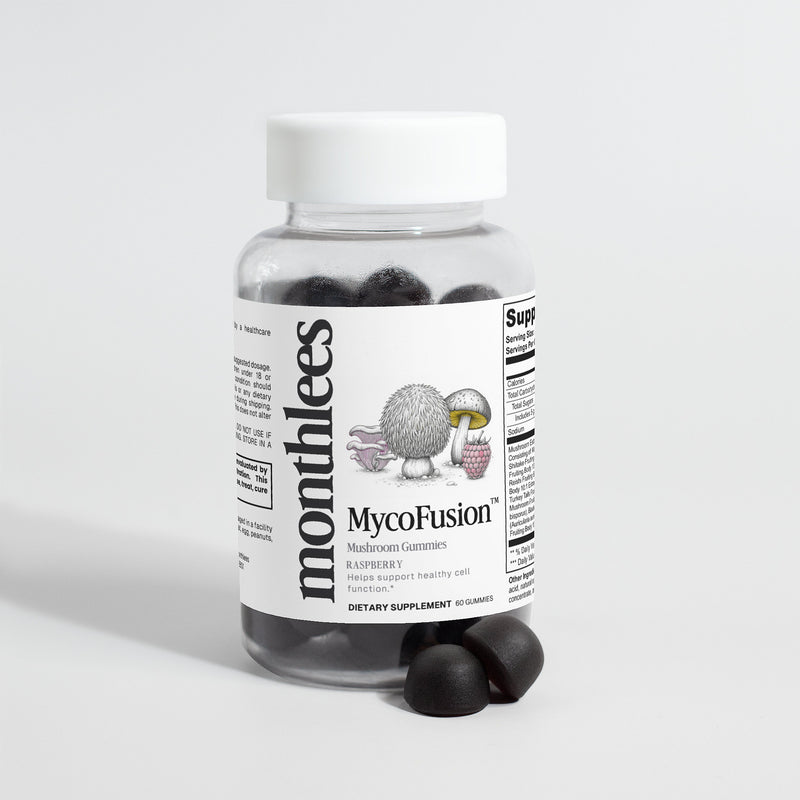
Monthlees includes reishi in the MycoFusion blend and its gummies, where it sits alongside other functional mushrooms in a daily format. Same source mushroom, offered as a capsule-style blend or a gummy depending on how you'd rather take it.

Frequently asked questions

What makes reishi different from other mushrooms?

It's defined by two compound groups — polysaccharides and triterpenes — rather than one.

Why does reishi taste bitter?

The bitterness comes from its triterpenes, so it's a rough cue that fraction is present.

Blend or gummy?

Same source mushroom — the blend is the everyday capsule-style option, the gummy trades bitterness for convenience.

When do people take it?

Often as part of an evening or steady daily routine, as a long-term habit.

Research & references

  1. A Review of Ganoderma Triterpenoids and Their Bioactivities.Biomolecules (2022) (source)
    Documents reishi's triterpene fraction as a defining constituent group.
  2. Chemical Components of Ganoderma.Advances in Experimental Medicine and Biology (2019) (source)
    Documents reishi's chemical composition, including polysaccharides and triterpenes.

References are provided for general educational context. They do not imply that this product treats, cures, or prevents any disease.

These statements have not been evaluated by the Food and Drug Administration. This product is not intended to diagnose, treat, cure, or prevent any disease.

Find your pattern →

Free 3-minute assessment. No purchase required.

MycoFusion™

Ten functional mushrooms in two capsules — cognitive clarity, immune resilience, and stress balance.
Guest $32.99
Member

MycoFusion™ Gummies

Ten functional mushrooms — one delicious daily gummy for focus, stamina, and whole-body wellness.

Guest $36.60
Member

Monthlees membership

Unlock member pricing on every reorder — cancel anytime.

Join for member pricing →

Explore more guides

See how this ingredient fits into broader goals and daily routines.